



By Tarcyla Fidalgo
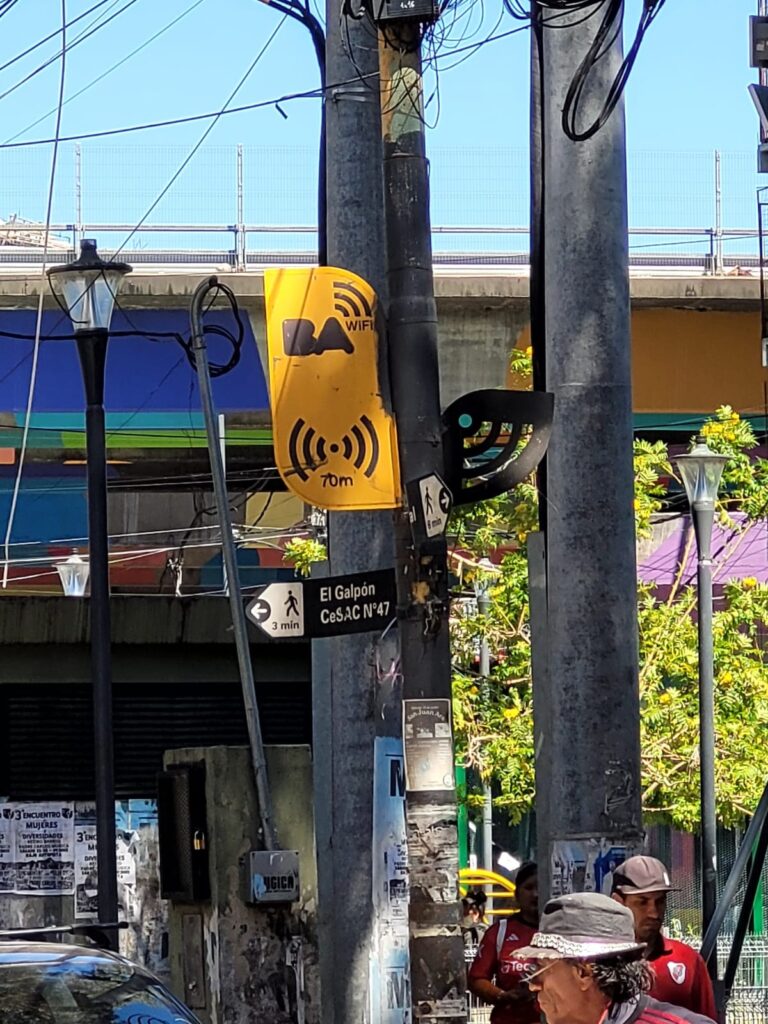
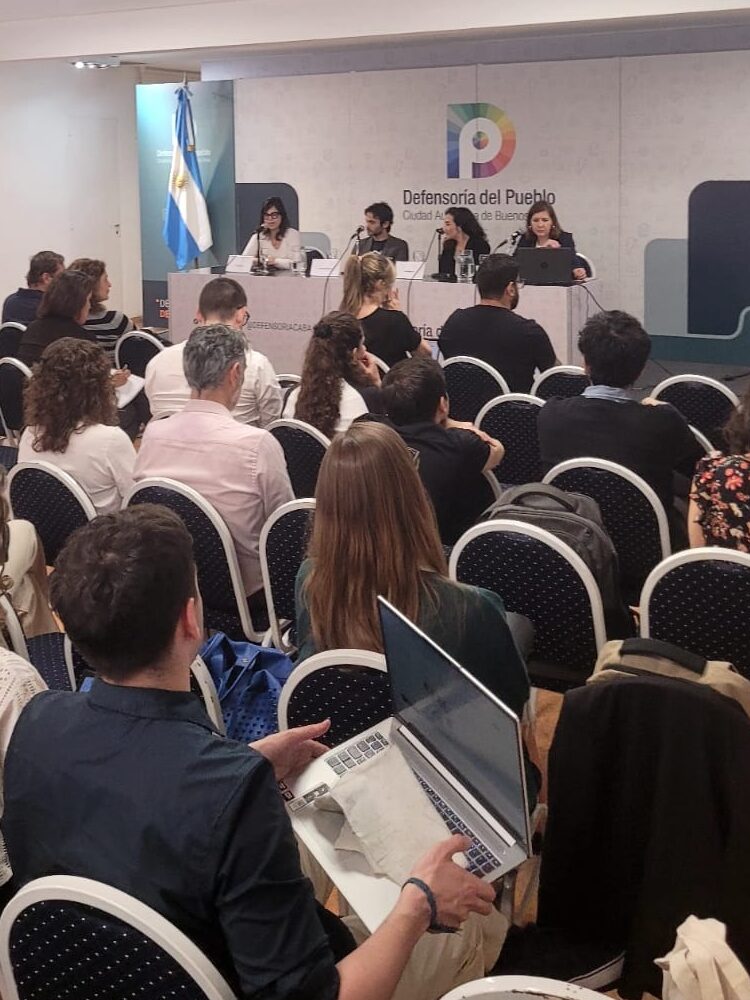
In October 2025, as part of the Global South CLT Initiative at the CLT Center, Project Lead Tarcyla Fidalgo visited Buenos Aires, Argentina, to exchange ideas on affordable housing, tenure security, and collective land ownership. The visit built on growing local interest in CLTs following a CLT Center-hosted virtual session during World CLT Day 2025, after which Tarcyla was invited by the Defensoría del Pueblo de la Ciudad de Buenos Aires (Office of the Public Defender of the City of Buenos Aires) to participate in a World Habitat Day event focused on advancing the right to housing and more just cities.
Constructing More Just Cities: An Invitation to Dialogue
The event convened a diverse coalition of actors—social organizations, academics, government institutions, and private-sector partners—to reflect on urgent urban challenges such as housing access, spatial planning, and the realities faced by residents of barrios populares (informal settlements) in Buenos Aires.
Organized in collaboration with Habitat for Humanity Argentina, TECHO – Argentina, CIPPEC (Center for the Implementation of Public Policies Promoting Equity and Growth), MUJERES 2000, RIL Argentina (Local Innovation Network), CAF (Development Bank of Latin America and the Caribbean), Fundación Vivienda Digna (Dignified Housing Foundation), Fundación Tejido Urbano (Urban Fabric Foundation), ACIJ Asociación Civil por la Igualdad y la Justicia (Civil Association for Equality and Justice), and the CLT Center, the event underscored how achieving the right to housing requires collective effort, open dialogue, and shared vision across sectors.
The gathering also featured Hecho en Buenos Aires (Made in Buenos Aires), a powerful art exhibition created by people experiencing homelessness. The exhibition offered a human perspective that grounded the policy discussion in lived experience and reinforced the importance of dignity and inclusion in housing debates.
Field Visits and Conversations on Housing Affordability
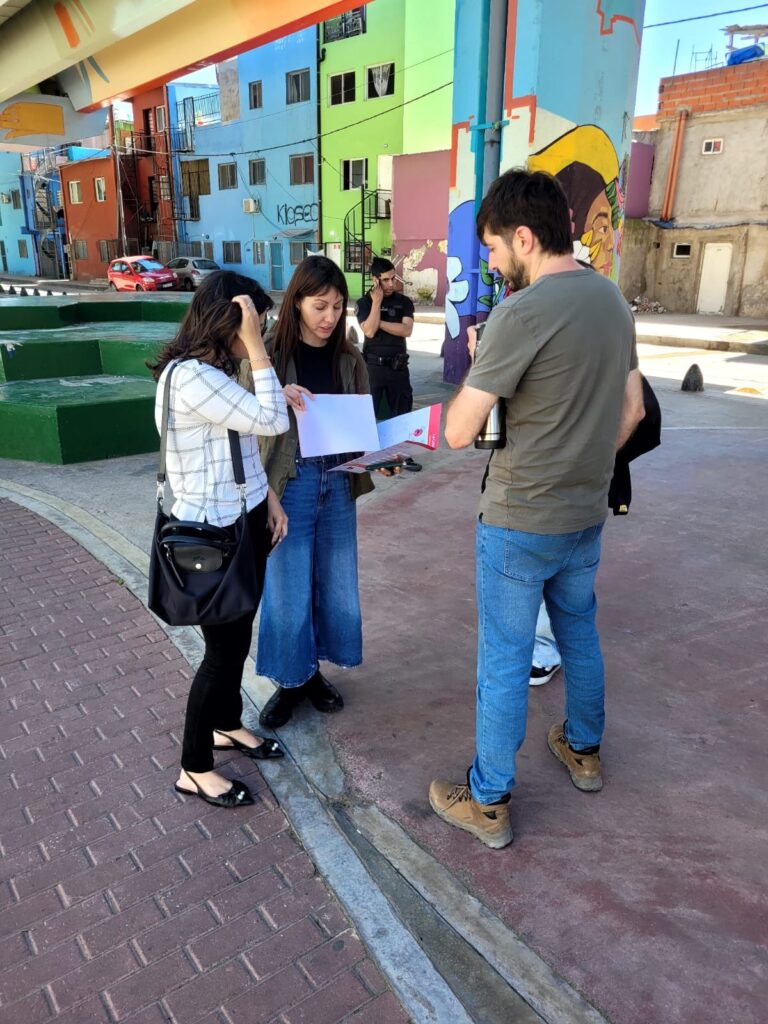
While in Buenos Aires, Tarcyla visited several organizations and initiatives addressing the housing crisis from different angles. At Comuna 21 – Comunidad Mugica, she observed the government’s ongoing urban upgrading and land regularization project, initiated in 2016. The initiative, which has resettled over a thousand families into new homes built on community-owned land, reflects both the progress and the persistent challenges of ensuring genuine community participation, long-term affordability, and protections against speculation.
Tarcyla also met with Habitat for Humanity Argentina, which is piloting a social rental housing project (alquiler social) comprising nine apartments. The initiative was developed in response to skyrocketing rent prices—up more than 200% post-pandemic—following the expiration of rent control legislation and the tightening of rental security requirements.
The project aims to provide a temporary housing solution of two to three years, allowing families time to stabilize, rebuild, and re-enter the formal rental market. Rents are set at market value, but with organizational subsidies of up to 40%, ensuring affordability. Tenants are not required to provide the typical financial guarantees that often bar low-income families from accessing formal leases.
In an innovative twist, 10% of each tenant’s rent is placed into a personal savings account, which is returned at the end of the lease term. This creates a financial cushion for moving expenses or future housing deposits. The program also incorporates job training and financial education, supporting residents’ entry into the formal labor market.
Due to Argentina’s high inflation rate, rents are adjusted quarterly to maintain the project’s financial sustainability. Despite this challenge, early data shows the pilot’s positive impact on families’ economic stability and social well-being, positioning it as a promising model for replication and adaptation.
Engaging Policymakers and Advocating for Collective Ownership
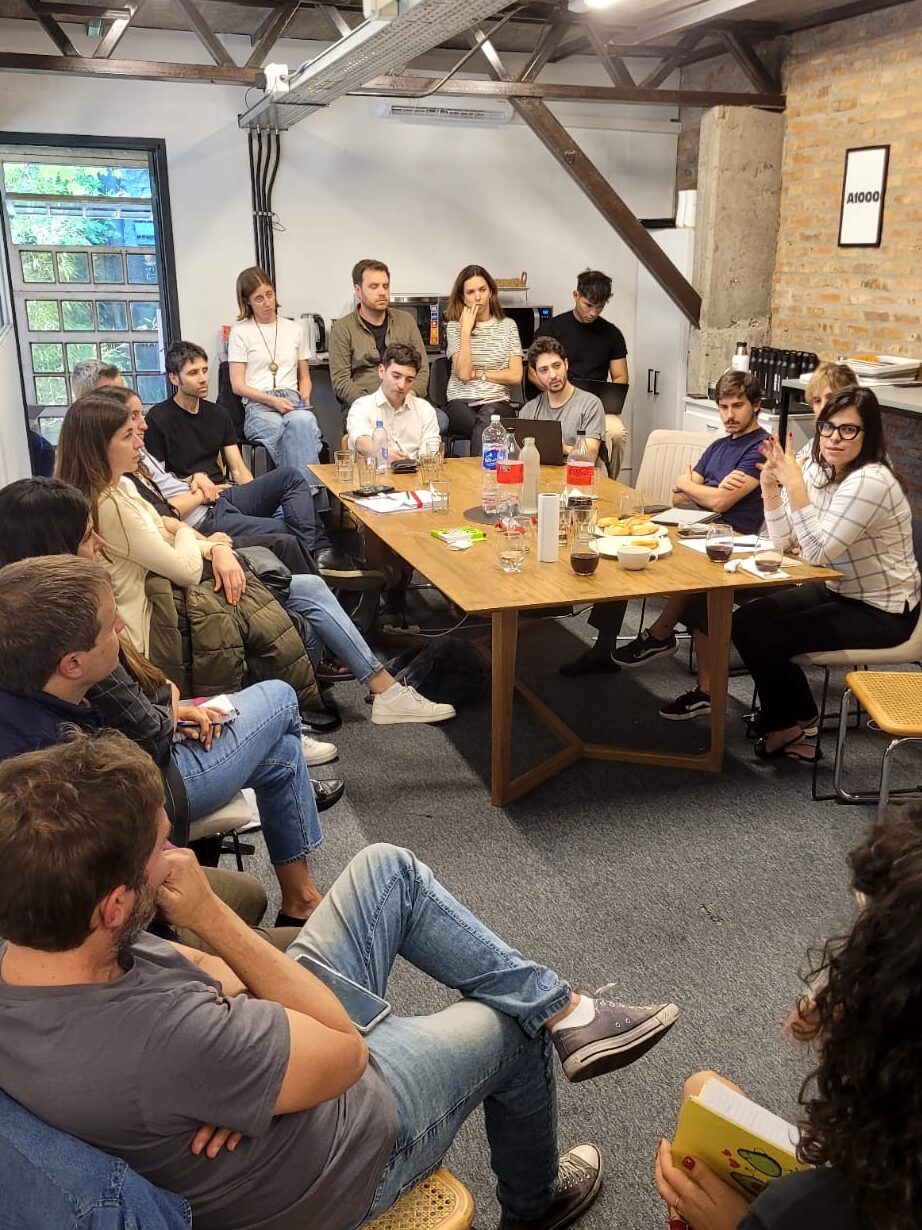
A productive dialogue with members of parliament followed, bringing together several allies in social housing, including María Migliore (former Minister of Human Development and Habitat), and legislators Emmanuel Ferraro, Manuela Thourte, and Manuel Socías. During the discussion, Tarcyla presented the Community Land Trust framework and shared global examples—from Puerto Rico to Kenya and Brazil—that illustrate how CLTs can combine secure tenure with collective management and long-term affordability. The meeting sparked interest among policymakers eager to explore the potential for applying the CLT model within Buenos Aires and beyond.
Seminar on the Right to the City
In the seminar “The Right to the City: Alternatives for Access to Housing and Habitat,” Tarcyla’s participation brought together over 80 participants for a full day of presentations and dialogue. The seminar centered on accessibility as a cornerstone of the right to housing, emphasizing the need to view housing as a social right rather than a financial asset. Discussions also highlighted the importance of self-management and community participation in shaping urban policy—core values shared by the CLT model.
Throughout the day, participants recognized the need for flexible legal and financial instruments that can adapt to diverse local realities. There was strong interest in social rental and collective land ownership models, with particular attention to how trust-based legal entities might offer pathways to financing and tenure security.
Building Connections Across the Global South
Tarcyla’s visit to Buenos Aires marks another step in the CLT Center’s work to accompany and connect community-led efforts across the Global South. The Global South CLT Initiative raises awareness and builds capacity around the use of Community Land Trusts to secure land tenure, prevent displacement, and promote equitable housing in informal settlements.
Grounded in the belief that secure land and housing are human rights, the initiative brings together grassroots leaders, technical allies, and community-based organizations to strengthen collective responses to the intersecting crises of land speculation, climate change, and urban inequality. Through exchanges like this one, the CLT Center continues to foster collaboration, develop practical resources, and empower communities to create dignified, community-controlled alternatives to market-driven urban development.
For more information about the Global South CLT Initiative at the CLT Center, please reach out to info@communitylandtrust.net.